1,504
estimated heat-associated deaths in England
UKHSA estimates that 1,504 deaths were associated with five periods of hot weather in England in summer 2025.
UKHSA, 2025 report (opens in a new tab)Support Rowan Victoria’s petition
Rowan Victoria’s petition asks Liverpool City Council and the UK Government to help low-income residents at greatest risk get suitable home cooling—and afford the electricity to use it during extreme heat.
Signatures and personal details are handled by Change.org.
Who the petition would helpLow-income residents at greatest risk from heat.
What the petition asks forSuitable cooling and help with electricity.
Long-term changeHomes that stay safer in summer.
Why this matters
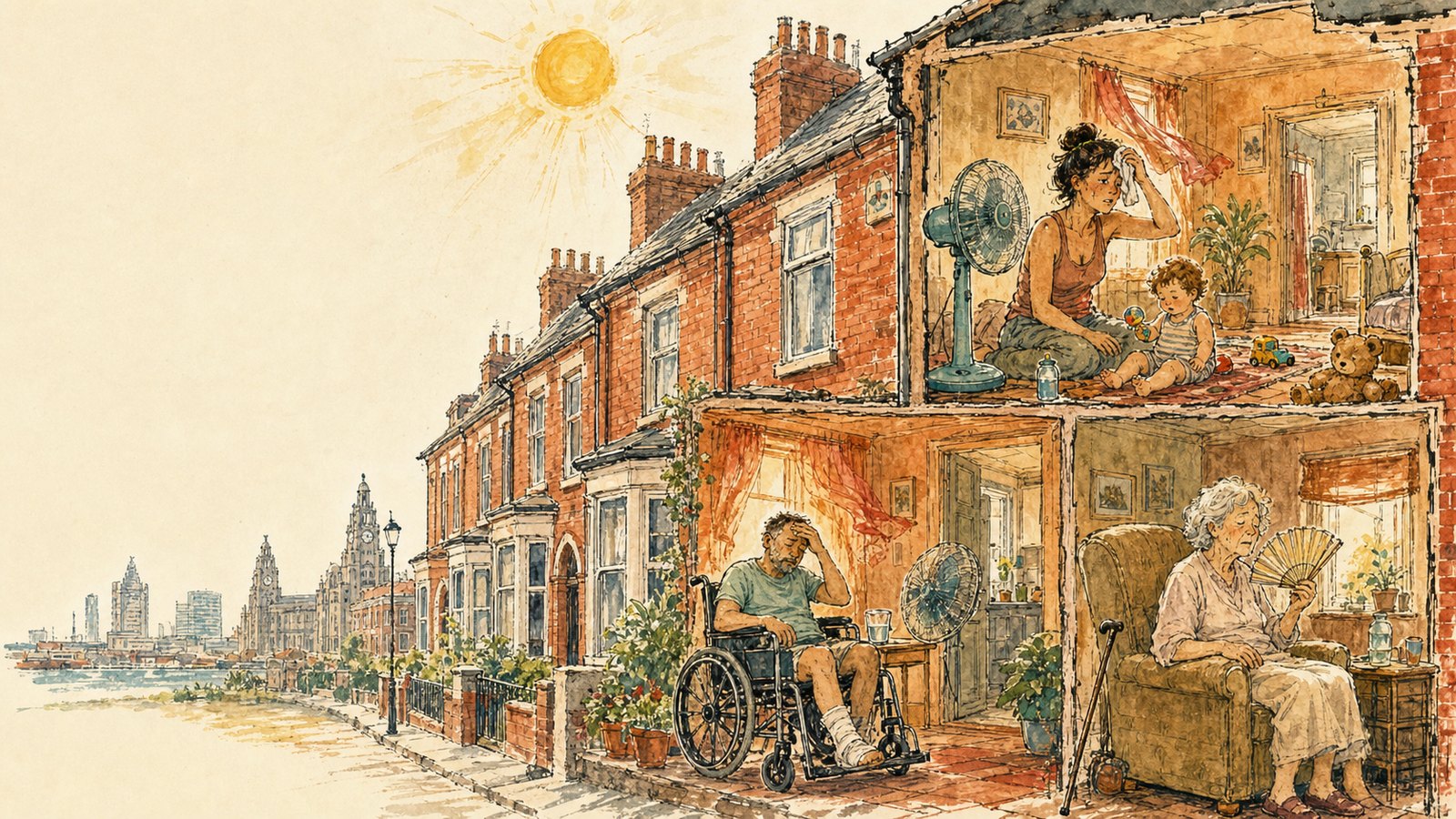
Some homes are much harder to keep cool—especially top-floor flats, homes with windows on only one side, large unshaded windows, or windows that cannot be opened safely.
For people already struggling with bills, buying a suitable cooling unit—and paying to run it—may be out of reach.
“Care and love cannot lower the temperature of a dangerously hot room.”
The evidence
The figures below come from official sources. Follow the links for the full reports.
1,504
UKHSA estimates that 1,504 deaths were associated with five periods of hot weather in England in summer 2025.
UKHSA, 2025 report (opens in a new tab)2.9m
In the 2023–24 English Housing Survey, 2.9 million households said their home became uncomfortably hot.
English Housing Survey (opens in a new tab)31,810
Liverpool City Council recorded 31,810 fuel-poor households in 2023—14.9% of Liverpool households, compared with 11.4% across England.
Liverpool City Council data (opens in a new tab)UKHSA says older people and people with existing health conditions face the greatest health risks in hot weather. Babies and children under five also need extra care.
What Rowan Victoria’s petition asks for
The petition asks for cooling support now and safer homes for the future.
Set aside reliable funding to help households cope with extreme heat.
Allow crisis-support funding to pay for suitable, energy-efficient cooling equipment.
Give priority to low-income residents whose health, age, disability or housing puts them at greatest risk.
Help households with the extra electricity cost during heat alerts.
Explain how to choose and use equipment safely, including when a fan or evaporative cooler may not be enough.
Improve homes with shading and safe ventilation, and make sure insulation work does not make summer overheating worse.
How the proposal could work
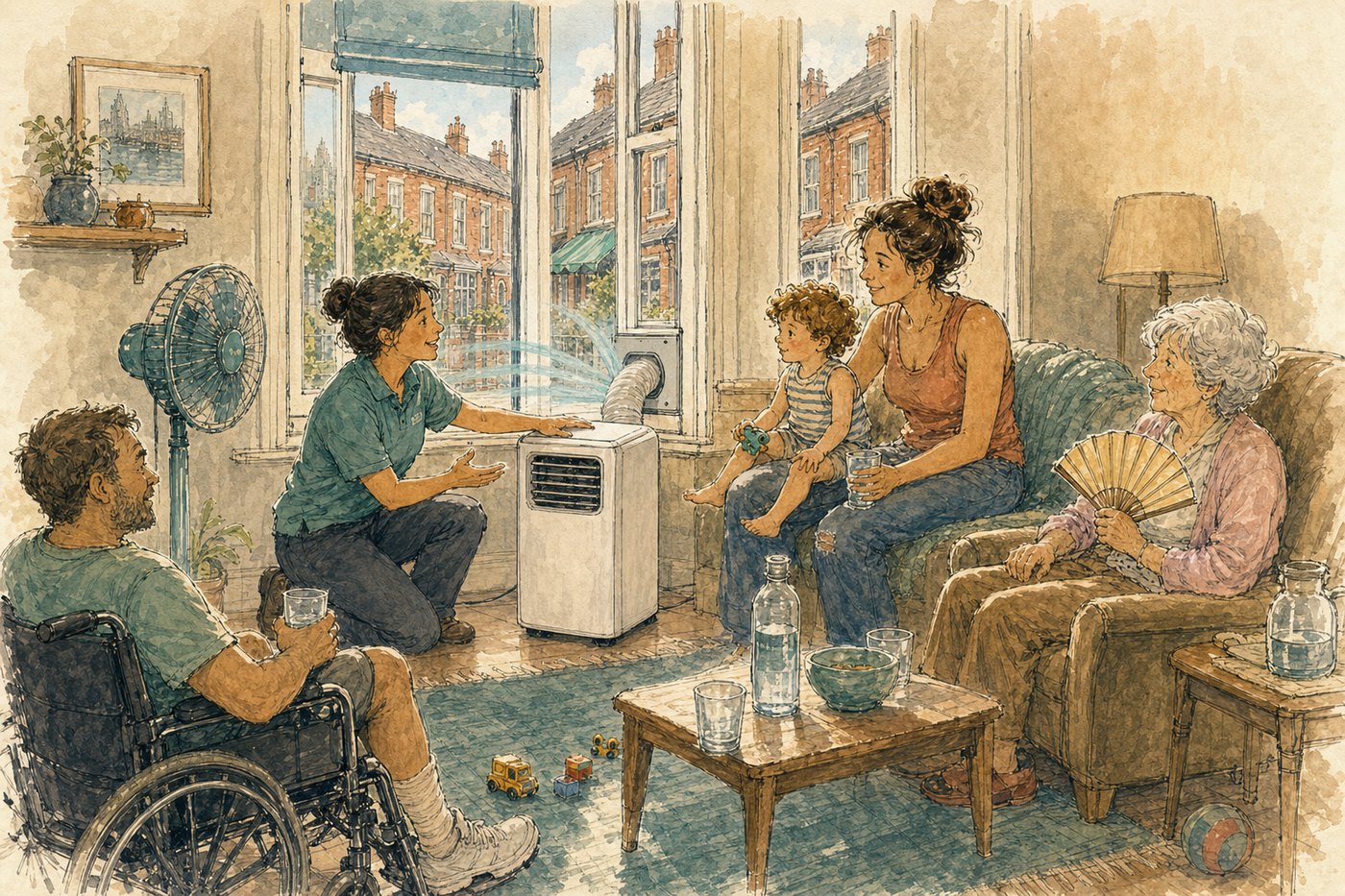
The petition calls for suitable equipment and safe-use guidance. Any scheme would need to consider the person, the building and how badly the home overheats.
Evaporative coolers add moisture and need ventilation; they are not the same as air conditioning. Insulation work should be checked so it does not trap too much heat in summer.
Who is at greater risk?
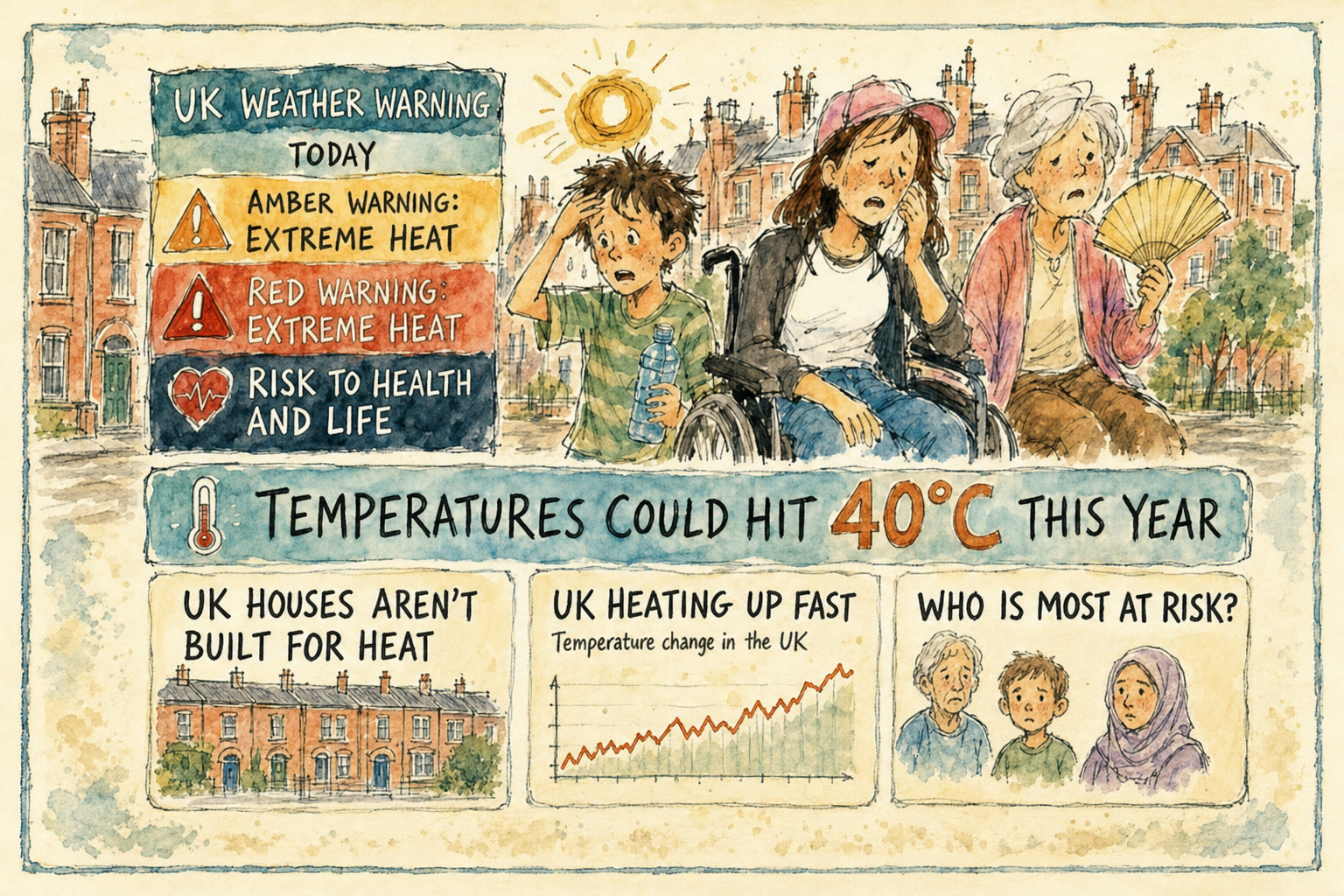
Older people; babies and children under five; pregnant people; and people with heart, lung or kidney conditions, diabetes, dementia, Parkinson’s disease or limited mobility.
People who live alone, are socially isolated, need help with daily activities, take medicines that affect temperature or hydration, or cannot keep themselves cool without help.
Top-floor flats; homes with windows on only one side; large unshaded windows; windows that cannot be opened safely; and homes in dense areas with little shade or green space.
Common questions
Rowan Victoria’s petition seeks help for low-income residents at greatest risk—not air conditioning for every home.
Fans help many people feel cooler, but they do not cool the room. In very hot conditions, or for someone at higher risk, a fan may not be enough.
Air conditioning uses electricity, so the scheme should start with shading and ventilation and provide efficient equipment where those measures are not enough.
Excess heat can be a housing hazard. Emergency help should not let landlords off the hook: renters may also need repairs or changes to the building.
Liverpool could add suitable cooling equipment to the help it already offers, take referrals from health and housing teams, decide urgent applications quickly during heat alerts, and publish what a pilot achieves.
Portable air conditioning can cost much more to run than a fan. That is why help with a suitable unit should include limited support with electricity during heat alerts.
Need help now?
For other support, use the official services below. If someone is still unwell after 30 minutes in a cool place, or has signs of heatstroke such as confusion, a seizure or loss of consciousness, call 999.
Add your voice
Sign Rowan Victoria’s petition asking Liverpool City Council and the UK Government to include safe cooling in crisis support.
Sources
Figures and links were last checked on 11 July 2026.